
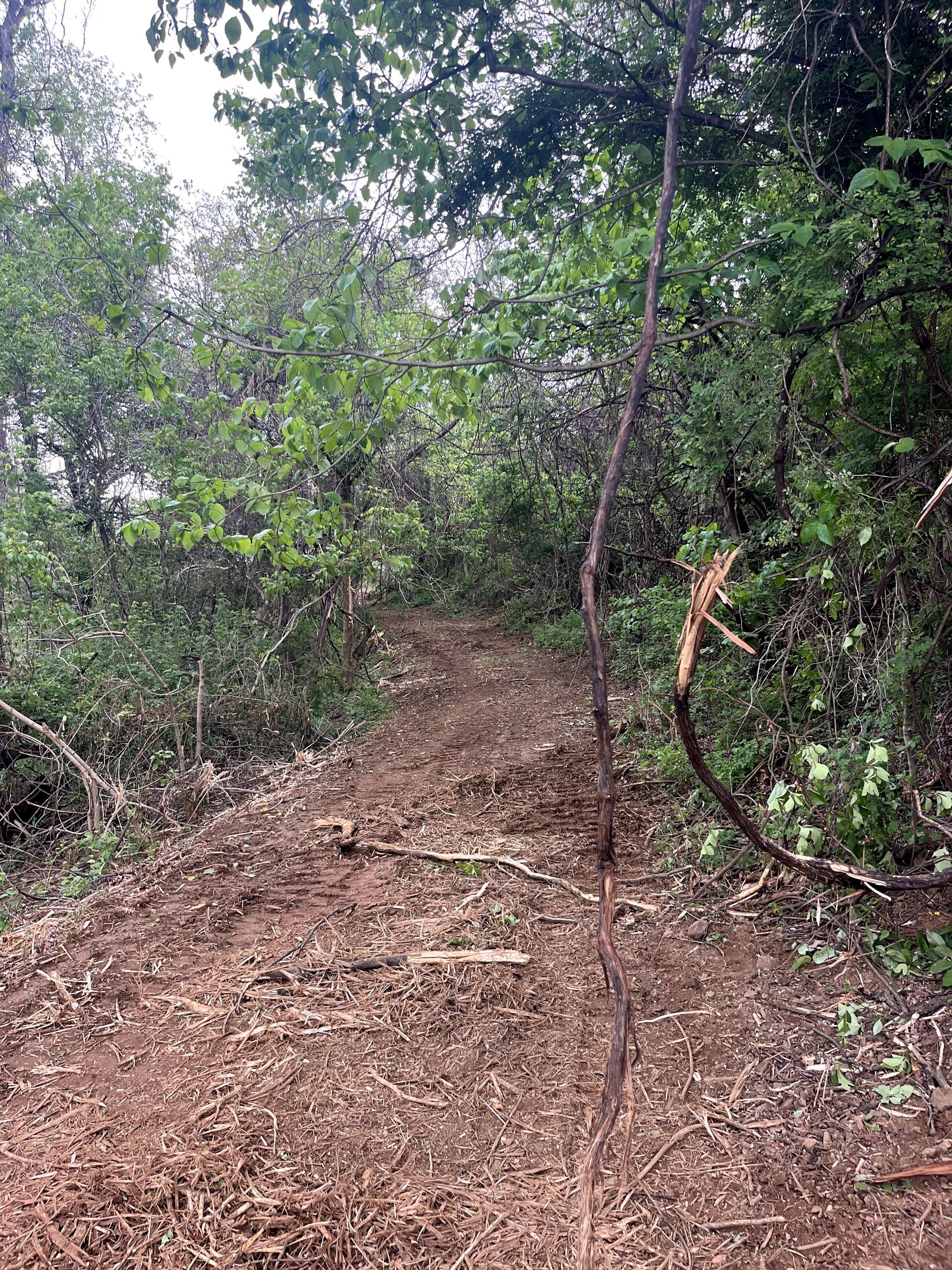
Paths That Make Wooded Property Functional
Trail Cutting in Stephens City for wooded acreage with difficult access and heavy undergrowth
Wooded property throughout the Shenandoah Valley often comes with steep terrain and dense undergrowth that blocks access to hunting zones, back fields, and scenic areas. BlueRidge Brush Clearing LLC performs trail cutting in Stephens City that creates defined routes through overgrown sections, allowing ATV movement, equipment transport, and foot traffic where none existed before. These trails are laid out based on slope, existing vegetation patterns, and what you plan to use the route for.
Trail cutting removes brush, small trees, and ground obstructions along a corridor that matches your access needs—wide enough for vehicles if necessary, or narrower for walking trails that wind through timber without disturbing the canopy. The layout accounts for drainage patterns and natural contours so the trail doesn't erode or collect water after heavy rain, which is common in Virginia's clay-based hillside soils.
Request a trail cutting consultation to map routes that fit your terrain and intended use.
What Changes After Trail Cutting Work Finishes
You see a cleared corridor with defined edges, visible from one endpoint to the other, wide enough for the equipment or foot traffic you specified. The surface is leveled where necessary to prevent ruts, and obstacles like exposed roots or embedded rocks are removed or cut flush to avoid tire damage or tripping hazards. Vegetation along the trail margins is trimmed back far enough that seasonal regrowth won't immediately close in the path.
The trail stays open longer because the initial clearing removes root systems and woody growth that would otherwise resprout quickly. You can drive an ATV to a treestand location, haul firewood out of back sections, or walk a property line without bushwhacking through brambles. Hunting properties see better coverage because trails connect different zones without spooking game along loud access routes.
Trail systems can be designed as loops, spurs to specific features, or direct routes between two points. Width, surface treatment, and vegetation removal depth are adjusted based on whether the trail serves utility access, recreational hiking, or equipment transport. Properties with multiple trails often phase the work to spread cost and observe how initial routes perform before adding connections.
Questions Property Owners Ask About Trail Work
Landowners throughout Stephens City and the surrounding valley region often ask similar questions when planning trail systems for wooded acreage.
How wide should a trail be for ATV access?
Most ATV trails are cut between six and eight feet wide to allow safe passage and slight maneuvering around obstacles, though wider routes are needed if side-by-side vehicles will use the path regularly.
What happens to the cleared vegetation along the trail?
Brush and small trees are typically mulched on-site or piled at designated locations, depending on volume and your preference for debris handling after the clearing work finishes.
When is the best time to cut trails in wooded areas?
Late fall through early spring works best because ground vegetation dies back, visibility improves, and the frozen or firm ground reduces rutting from equipment movement across slopes.
How do you prevent trails from washing out on hillsides?
Trail layout follows contour lines where possible, and water bars or drainage crossings are incorporated at low points where runoff naturally concentrates during storms.
Can trails be designed to connect specific features like cabin sites or ponds?
Yes, trail systems are customized around terrain and property goals, with routes planned to reach hunting zones, recreational features, or utility access points while avoiding steep grades or wet ground.
BlueRidge Brush Clearing LLC maps trail routes that match your property's terrain and access goals, whether you need direct equipment paths or winding recreational corridors through timber. Schedule an on-site consultation to review layout options and clearing requirements for your wooded acreage.